.png)
How to standardise your background check screening process for fairer, consistent hiring decisions
Background checks can be life savers, but they can’t save you from poor hiring decisions if no one knows how to use them.
We all want to trust the people we hire, and background checks give you the information you need to make that call with confidence. But without a clear, documented process for what to do with that information, hiring managers are left to wing it.
The result is inconsistent decisions, bias risk, and greater legal exposure.
Background checks only work if the process behind them works. Here’s how to standardise your screening process for fairer, consistent hiring decisions.
In this guide:
Where inconsistencies show up in the background check process
There’s often a gap between what the screening policy says and what actually happens day-to-day. How your hiring managers execute and evaluate background checks can vary wildly depending on their training, their knowledge of policies, and their own judgement calls.
The result? Different teams screening differently, similar roles assessed inconsistently, and manager discretion quietly influencing outcomes it shouldn't.
The same gap shows up in different ways. Here's what it looks like in practice.
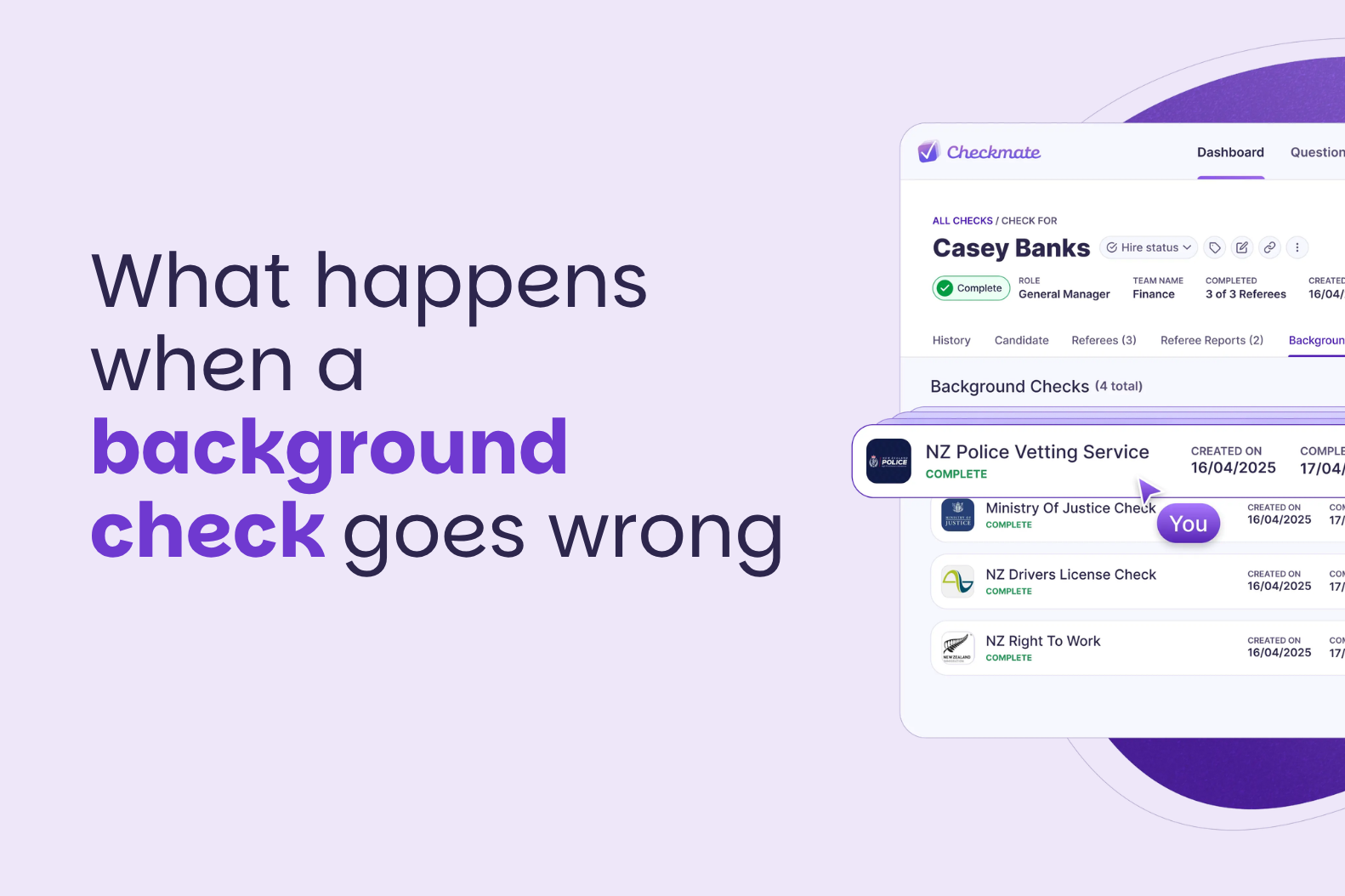
Scenario one — A chef interviews well and a background check flags a minor theft conviction from eight years ago. With no adjudication process to weigh recency, relevance, or risk to the role, the hiring manager dismisses the candidate on the spot, even though the flag may have had nothing to do with their ability to do the job.
Scenario two — A different hiring manager is under pressure to fill the role fast. The candidate seemed great, the offer needed to go out, and the check results were taking longer than expected, so they go ahead without reviewing them. Months after the candidate joins, complaints start coming in, the kind the check would have flagged in the first place. Now there's no documentation showing the check was ever considered, and no way to explain the decision if it's ever questioned.
Scenario three — The manager follows the documented adjudication process for the role, follows up with the candidate, and gets the context behind the flag. It turns out to be a paperwork error from a previous employer, which is easily explained. The candidate is appointed, and the decision is fully documented if anyone ever asks why.
The same policy. Three different outcomes. One of them you could defend if it ever came up in a tribunal.
How to fix your screening execution gap with standardised background checks
In theory, your screening policy sets the standard. In practice, risk profiles vary by role, data can be messy, and individual hiring managers bring their own biases and blind spots.
Here are three steps to standardise your background checks and build a fair, consistent hiring process.
1) Build a risk matrix for each role profile
Not every finding should be treated equally for every role. That’s why a standardised role-related risk matrix helps you get clear about relevant red flags, and when to dig deeper. This will help bridge the gap between your trigger-happy managers who automatically disqualify on every flag, and the super chill managers who prefer to give everyone a second chance!
Start by identifying and categorising risks by severity (low, medium, high), so you can determine the right action for any flagged check.
For example, an Aged Care Nurse doesn’t have access to company finances or budgets but has access to medicine and patient possessions. You might determine that there’s a high risk of theft for this role profile, but company fraud is low risk.
2) Identify your required checks (and those ‘good to know’)
Start with the checks you're legally required to run in your region, then assess them against the role risks you need to mitigate.You might also include some ‘good to know’ checks for due diligence, such as social and media checks, or drug and health checks (if there’s a risk to customer or employee safety). Be sure to document what check needs to be run, when to run it, and why it’s important.
Using the Aged Care Nurse example above, you might include criminal history and employment checks, but credit history checks aren't relevant at this risk level.Check out our industry specific guides to background checks for a full sweep of regional and industry-relevant checks you should be running and why.
3) Build an adjudication framework to evaluate and act on adverse findings
Some things in a candidate's background are non-negotiable, and others need context. Adjudication guidelines provide clear pass/fail/review criteria based on the role risk you’ve identified, so every candidate gets evaluated the same way.
When determining your criteria, you’ll want to factor in recency, reoccurrence, relevance to role, risk level, and impact of risk to company, customers, and employees.
For any flagged checks, your action criteria might look like:
- automatic disqualification (e.g., financial fraud for any role with access to budget, corporate cards and purchasing processes)
- review (e.g., minor theft from 15 years ago for a bus driver), or
- proceed due to insignificance (e.g., a speeding ticket ten years ago for the onsite barista).
Not every role attracts the same level of risk, so this is an important process to help you consistently respond to findings across teams and functions.
Manual vs automated execution
If your company runs a high volume of background checks, automation can lighten the load and take the pressure off individual managers, especially for high-risk roles. Checkmate, for example, lets you split actions into manual and automated execution based on the criteria you've already defined.
Manual: For any flagged check that is assigned to ‘review’ and followed up, you’d keep humans in charge.
Automated execution: Set specific rules that tell your background checking system how to act on your behalf in absolute scenarios. Examples:
- Tell the system to automatically disqualify any candidates who return automatically disqualifiable flags.
- For reviewable flags, you could split actions further to either automatically clear (insignificant risk) or follow up with the candidate, and humans take over.
Make the right background check decision every hire
Supporting your hiring managers with clear frameworks — a risk matrix, defined checks, and an adjudication process — is how you turn a screening policy into something that actually gets followed.
Document it, automate where you can, and you'll have hiring decisions that are consistent, auditable, and legally defensible every time.
See how Checkmate helps you standardise background checks, remove guesswork from adjudication, and make every hiring decision defensible.
FAQs
What causes the gap between screening policies and their execution?
The gap between screening policy and execution typically comes down to missing adjudication frameworks and practical guidance. Your policy may define what to check, but without clear criteria for evaluating results, hiring managers apply it differently across teams and roles — leading to inconsistent, and sometimes indefensible, hiring decisions.
Why are hiring decisions inconsistent?
Hiring decisions become inconsistent when screening policies lack the adjudication frameworks to back them up. Without clear pass/fail/review criteria, managers make judgment calls — which opens the door to subjectivity, bias, and non-compliance. A platform like Checkmate makes it much easier to centralise oversight and keep decisions consistent and auditable.
How do you standardise screening decisions?
You can standardise screening decisions by building a documented background check process and adjudication guidelines that address the identified risks for each role profile. Your adjudication framework should include pre-set criteria for each identified red flag based on risk level, and the required action. Any definitive results (like automatic disqualification) can be automated by partnering with a background screening provider, like Checkmate.
How can you measure screening policy effectiveness?
Periodically audit recent hires and any rescinded offers to check whether your background check process is being applied consistently across the business. Comb the data for discrepancies and trends in decisions made that may indicate bias, or false negatives where adjudication guidelines clearly haven’t been followed and suitable candidates have been hastily rejected.
.png)
.png)